Made in the U.S.A.
Rifle & Magazine Care and Maintenance
Most feeding problems in a .22 or a centerfire bolt gun trace back to the magazine, not the rifle — a dirty follower, a bent feed lip, or a spring that's never been cycled. This guide covers general cleaning and storage practices that apply to any detachable box magazine, whether it's a Marlin rimfire magazine or a Remington 783 centerfire magazine, and where to find a spare or replacement when yours is past saving.
None of this requires special tools. A dry cloth, a small amount of gun oil, and a few minutes of attention after a range day or before long-term storage covers nearly everything below.
Cleaning a rifle magazine
A magazine is a simple spring-and-follower assembly, so cleaning it doesn't take long. Unload it completely first. Wipe down the body, follower, and feed lips with a dry or lightly oiled cloth to clear out grit, unburned powder, and moisture. Avoid soaking the inside of the magazine in oil — a wet magazine attracts dust and debris, which is more likely to cause a feeding issue than a dry one. If your magazine's floor plate comes apart, remove it, clean the spring and follower separately, and reassemble dry.
Should you store a magazine loaded or empty?
Modern magazine springs are designed to sit under tension, so keeping a magazine loaded for extended periods generally does not wear out the spring. What does cause wear over time is repeated loading and unloading — cycling the spring, not sitting under load, is the harder use case. For long-term storage, keep magazines clean and dry, out of direct humidity, and cycle them (load and unload) every so often rather than leaving them untouched for years.
Black oxide versus nickel — care differences
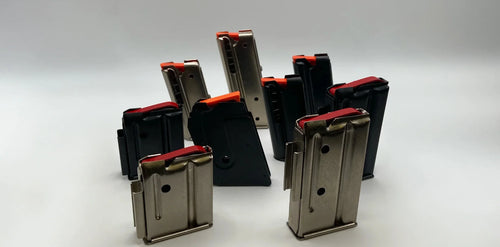
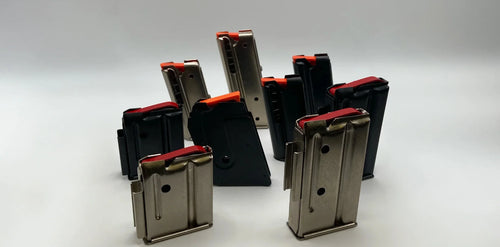
Black oxide offers a classic matte finish with solid corrosion resistance as long as it gets a light coat of oil after exposure to moisture. Nickel plating adds extra resistance to rust and scratching and wipes clean easily, which is why it holds up well in a range bag or truck console without regular attention. Neither finish requires special tools or products — a dry cloth and an occasional light wipe of gun oil is enough for either one.
Troubleshooting a magazine that won't feed
If a magazine stops feeding reliably, work through it in order: clean the feed lips and follower first, since debris buildup is the most common cause. Next, confirm the follower moves freely top to bottom with no binding. Finally, check the spring for visible kinks or a follower that doesn't return under its own tension — a weak or damaged spring is the next most likely cause after dirt. If a magazine still won't feed correctly after cleaning and inspection, it may be worn out or damaged and due for replacement rather than repair.
A magazine that's loose in the well
On some older Marlin Model 80-series rifles, a magazine can sit loose in the well and rock instead of locking in cleanly — this is a fit issue with the rifle's magazine well, not a sign the magazine itself is bad. ARM makes the Clip-Rite fit fix specifically for Marlin Model 80C, 80DL, 80E, and 80G rifles to correct this using the existing screws that hold the magazine bottom plate in place.
When to replace instead of repair
A magazine with a cracked body, a feed lip that's visibly bent out of shape, or a spring that no longer returns the follower under its own tension is done — cleaning won't fix a structural problem. At that point the fastest and most reliable fix is a factory-pattern replacement built to the original geometry, rather than trying to bend feed lips back into spec by hand, which usually just moves the problem instead of solving it.
Age alone isn't a reason to replace a magazine that's still feeding correctly. A well-maintained magazine with an intact body, straight feed lips, and a spring that returns the follower cleanly can keep working for the life of the rifle. Replace based on condition and function, not how old the magazine is.
How many spares should you keep on hand?
There's no single right number, but most shooters keep at least one loaded spare for a fast reload, and two or three if they shoot regularly at the range or hunt with the rifle. Keeping a spare on hand also means you're not stuck mid-season if your primary magazine develops a problem. See the hunting & range life guide for more on how many magazines to carry in the field versus at the bench.
Field conditions: cold, dust, and moisture
Cold weather can make a magazine spring feel stiffer and grit or dust picked up in the field can slow a follower down, both of which show up as sluggish feeding right when you need the rifle to work without hesitation. A quick check before you head out — cycle the magazine a few times, wipe the feed lips, and confirm the follower moves freely — catches most of these issues before they become a problem in the field rather than after.
Storage location matters as much as technique
Where you store a magazine long-term affects it as much as how you clean it. A damp basement, a garage that swings through temperature and humidity changes, or a gun safe without any moisture control all encourage surface rust on exposed steel, especially black oxide. Keeping magazines in a dry, temperature-stable space, and giving them a light wipe of oil before long-term storage, does more for longevity than any specific cleaning product.
Rifle and magazine care FAQ
How often should I clean my magazine?
After any range session where you notice grit, moisture, or sluggish feeding, and at least once per season of regular use even if it seems fine. A quick wipe-down takes a few minutes and prevents most feeding problems before they start.
Is it bad to store a magazine fully loaded?
No. Modern springs are designed to hold tension long-term. Repeated loading and unloading causes more wear than simply leaving a magazine loaded in storage.
What's the difference in maintenance between black oxide and nickel magazines?
Very little. Black oxide benefits from a slightly more frequent light oiling in humid conditions; nickel resists rust a bit better on its own. Both just need a dry-cloth wipe-down as routine care.
My Marlin magazine sits loose in the rifle — is it broken?
Not necessarily. On some Model 80-series Marlins this is a known fit issue with the magazine well itself. The Clip-Rite fit fix is built to correct it without replacing the magazine.
Should I use gun oil, grease, or something else inside a magazine?
A light coat of standard gun oil is enough — heavier grease or lubricant tends to collect dust and unburned powder residue, which causes the exact feeding problems you're trying to prevent. Keep the inside of the magazine dry to lightly oiled, not saturated.
Need a replacement or a spare?
Match your exact rifle with the Marlin Magazine Guide or the Remington 783 Magazine Guide, or browse every magazine we make. All of them are manufactured in the USA and ship from our shop in Naugatuck, Connecticut.
Replacement magazines
- Marlin 71900 7-Round .22LR Black Oxide Magazine
- Marlin 71901 7-Round .22LR Nickel Magazine
- Remington 783 Short Action 4-Round Magazine
Further reading
Magazine not feeding right?
A clean magazine fixes most .22 feeding problems — here's how.
Care & Maintenance Guides
See all articles →Straight answers from the people who build the magazines.
Rifle Magazine Cleaning & Maintenance Guide
Rifle Magazine Inspection and Cleaning Guide

Cleaning & Lube for Remington 783 Magazines

Remington 783 Magazine Follower Problems: Troubleshooting and Repair Guide

Cleaning Your Remington 783 Magazine After Field Use: A Step-by-Step Guide to Removing Dirt and Debris